

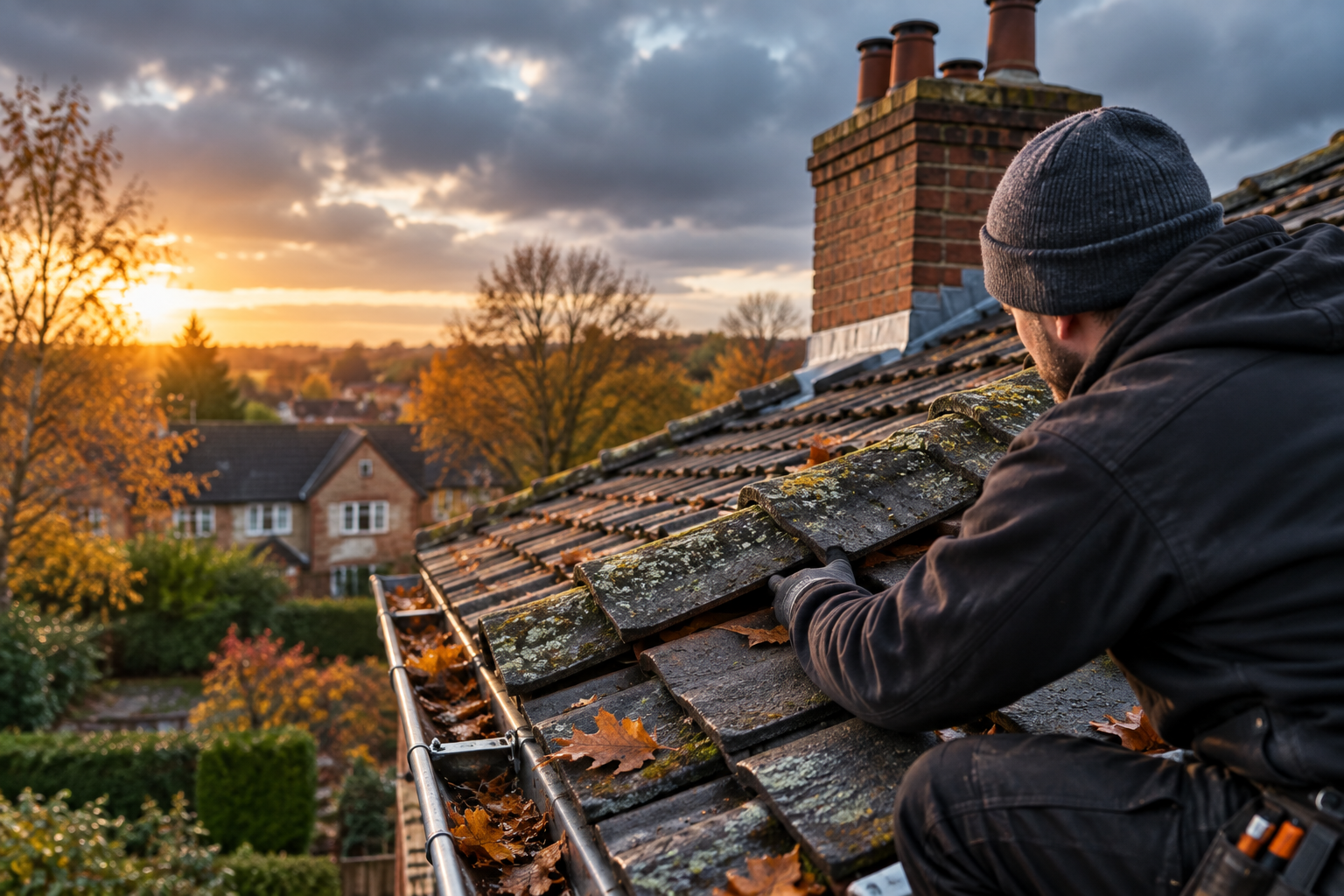
As summer comes to an end and the wetter months approach, September is a good time to take a closer look at the condition of your roof.
A small roofing problem that causes little trouble during dry weather can quickly become much more serious once autumn brings heavier rain, stronger winds and falling temperatures. Missing tiles, damaged flashing or a minor leak can allow water into the roof structure, potentially resulting in damp, damaged insulation and expensive repairs.
Preparing your roof before winter can help protect your home and give you time to deal with problems before severe weather arrives.
At D&W Roofing Services, we provide professional roof repairs and roof inspections across Suffolk, Norfolk and Essex. Here are seven warning signs homeowners should look out for this autumn.
1. Missing, Broken or Slipped Roof Tiles
One of the easiest roofing problems to identify is a missing or damaged tile.
Tiles can crack, move or become loose because of age, weather exposure and strong winds. Even a relatively small opening can allow rainwater underneath the roofing system.
From ground level, look for:
- Missing tiles
- Cracked tiles
- Tiles that appear out of position
- Uneven sections of roofing
- Pieces of tile around the property
A few damaged tiles don’t necessarily mean you need a new roof. In many cases, individual tiles can be replaced as part of a straightforward roof repair.
However, they shouldn’t be ignored.
Autumn and winter storms may make existing damage considerably worse.
2. Damp Patches or Water Marks Inside Your Home
A stain on the ceiling can be one of the first visible signs of a roof leak.
Look for:
- Brown or yellow marks on ceilings
- Damp patches near external walls
- Moisture around the chimney breast
- Peeling paint
- Bubbling plaster
- Signs of mould
One important thing to remember is that the location of the stain doesn’t always show exactly where water is entering the roof.
Rainwater can travel along roofing materials and roof timbers before appearing inside the property.
This is why simply covering or repainting a damp patch won’t solve the underlying problem.
The source of the leak needs to be identified.
3. Problems Around Your Chimney or Lead Flashing
Areas where different roofing materials meet are particularly vulnerable to water penetration.
One of the most important is the area surrounding a chimney.
Lead flashing is commonly used to create a weatherproof joint between the chimney and roof. Over time, flashing can become loose, cracked or damaged.
You may notice:
- Loose or lifted leadwork
- Cracked mortar
- Damp near the chimney
- Water entering during heavy rain
- Damaged tiles surrounding the chimney
Properly maintained leadwork plays an important role in keeping your roof watertight.
If you’ve noticed damp around your chimney following rainfall, it’s worth arranging an inspection before winter.
4. Your Roof Has Started Leaking
It sounds obvious, but many homeowners delay dealing with small roof leaks.
A minor drip during particularly heavy rain can seem manageable.
The problem is that water entering the roof may already be affecting areas you cannot see.
Persistent moisture can damage:
- Roof timbers
- Insulation
- Plasterboard
- Ceilings
- Interior decoration
It can also contribute to damp and mould.
A small leak is generally easier and cheaper to deal with than the damage caused after several months of wet weather.
If your roof is already leaking in September, don’t wait until December to investigate it.
5. Your Flat Roof Is Holding Water
Flat roofs require effective drainage.
Some temporary surface water immediately after rainfall isn’t necessarily unusual, but persistent standing water may indicate a drainage or roofing problem.
Other warning signs on a flat roof can include:
- Cracks
- Blistering
- Lifting edges
- Damaged seams
- Deteriorated roofing material
- Water entering the building
Older flat roofing systems can become particularly vulnerable during prolonged periods of wet and cold weather.
Having the roof inspected before winter allows any necessary flat roof repairs to be identified early.
6. You Can See Daylight or Damp in the Loft
Your loft can tell you a lot about the condition of your roof.
During daylight hours, safely inspect the loft from inside and look for anything unusual.
Warning signs may include:
- Damp roof timbers
- Wet insulation
- Water marks
- Mould
- Musty smells
- Unexpected daylight entering through the roof
A small amount of visible daylight doesn’t automatically identify the exact problem, as some roofing systems include intentional ventilation.
However, obvious gaps or moisture should be investigated.
It’s also important to distinguish between a roof leak and condensation.
Poor ventilation can allow moisture to accumulate inside a loft, particularly during colder months when warm air from the home meets colder roof surfaces.
A professional roof inspection can help determine the actual cause.
7. Your Roof Is Getting Old
Sometimes there isn’t one obvious defect.
The roof may simply be reaching a stage where several components are beginning to deteriorate.
Different roofing materials have different expected lifespans, and factors such as installation quality, exposure, maintenance and previous repairs all influence how long a roof lasts.
Signs of an ageing roof can include:
- Frequent repairs
- Increasing numbers of damaged tiles
- Recurring leaks
- Deteriorated flashing
- Sagging areas
- General deterioration across several parts of the roof
An older roof doesn’t automatically need replacing.
However, if you’re repeatedly paying for repairs, it may be worth comparing the cost of continuing maintenance with re-roofing or installing a new roof.
Why September Is a Good Time to Check Your Roof
There is a practical reason to inspect your roof before winter rather than waiting for something to go wrong.
Weather conditions generally become more challenging during autumn and winter.
Periods of heavy rain and strong winds can expose weaknesses that weren’t noticeable during summer.
Identifying problems now gives you an opportunity to arrange repairs before the worst weather arrives.
It can also help reduce the risk of needing an emergency repair in the middle of a storm.
Don’t Forget to Check After Strong Winds
Even if your roof appears to be in good condition, it’s worth checking it from ground level following particularly windy weather.
Look for tiles or roofing materials on the ground and any obvious changes to the roofline.
Strong winds can dislodge individual tiles or expose existing weaknesses.
Sometimes damage doesn’t cause an immediate leak.
The problem only becomes apparent when the next period of heavy rain arrives.
Should You Inspect the Roof Yourself?
You can perform a basic visual inspection safely from ground level and look inside your loft.
However, you should not climb onto the roof yourself.
Roofs can be slippery, fragile or damaged, and working at height without appropriate equipment is dangerous.
If you suspect a problem, arrange a professional inspection instead.
An experienced roofer can safely examine areas that are difficult to see from the ground and determine whether repairs are necessary.
Repair Now or Wait Until Spring?
If your roof has an identified problem, waiting through an entire winter is rarely the best option.
Rain, wind and colder temperatures can make existing damage worse.
Something as relatively simple as replacing damaged tiles or repairing flashing could prevent water from reaching the structure underneath.
Preventative repairs can therefore be considerably less expensive than dealing with extensive water damage later.
Roof Repairs & Inspections Across Suffolk, Norfolk and Essex
At D&W Roofing Services, we help homeowners and businesses keep their roofs safe, weatherproof and ready for the months ahead.
We provide professional roofing services throughout Suffolk, Norfolk and Essex, including:
- Roof Repairs
- Emergency Roof Repairs
- Storm Damage Repairs
- New Roofs
- Flat Roofing
- Leadwork
- Skylight Installation & Repairs
- Roof Inspections
Whether you’ve discovered a leak, noticed missing tiles or simply want reassurance about the condition of your roof before winter, our team can assess the situation and recommend an appropriate solution.
Is Your Roof Ready for Winter?
Don’t wait for heavy rain or the first major winter storm to reveal a problem.
If you’ve noticed any of these warning signs, contact D&W Roofing Services to arrange a professional roof inspection or discuss the repairs your property may need.
We provide reliable roofing services across Suffolk, Norfolk and Essex, with practical advice and high-quality workmanship.
Contact D&W Roofing Services today to request a free, no-obligation quotation and get your roof ready for winter.