

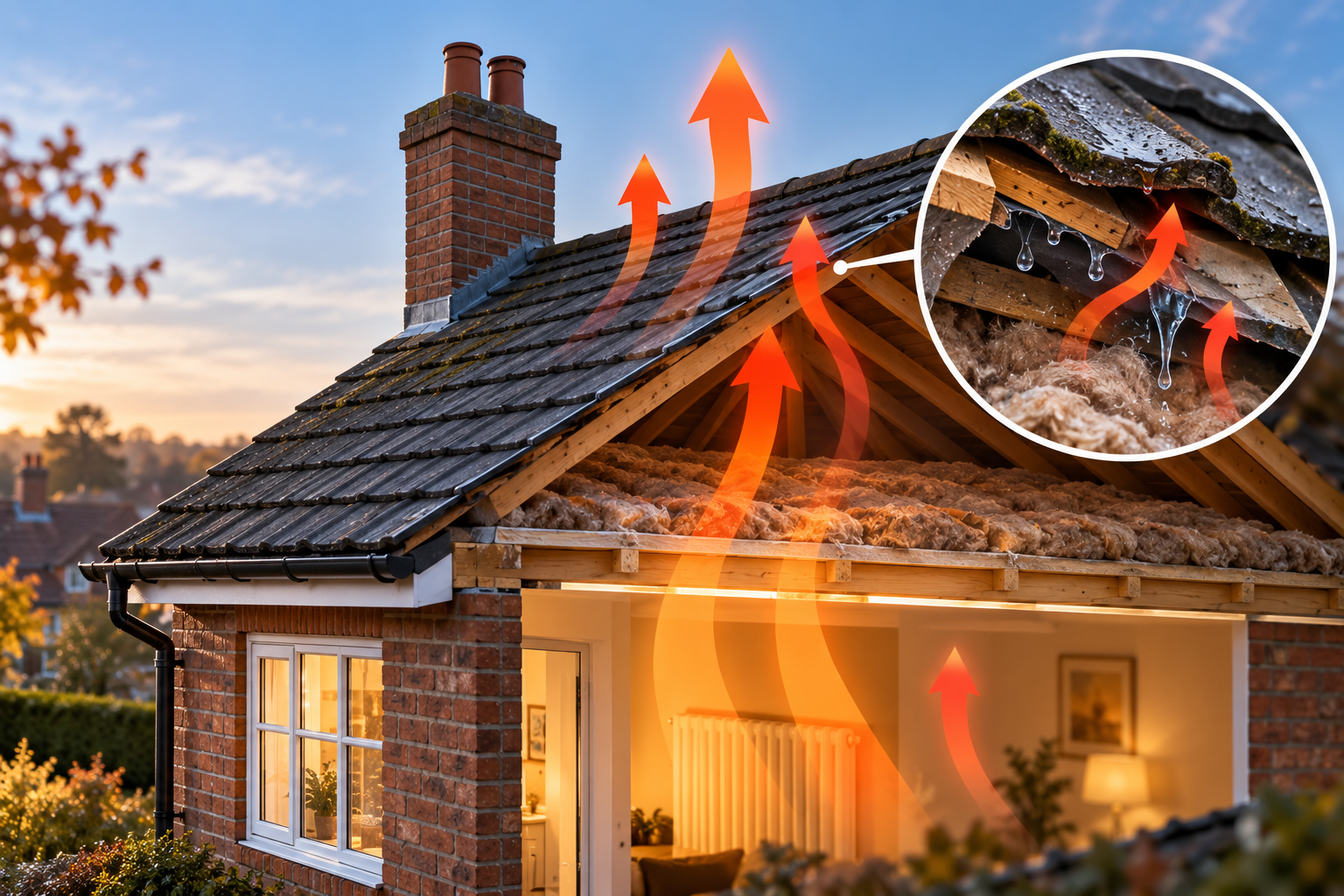
As temperatures begin to fall and heating systems come back on across the UK, many homeowners start looking for ways to reduce their energy bills.
Windows, boilers and heating controls usually receive most of the attention. But there is another part of the property worth considering: the roof.
A roof in poor condition doesn’t just increase the risk of leaks. Problems with the roofing system, insulation, ventilation or moisture can also affect how efficiently your home retains heat.
So, could the condition of your roof be making your home more expensive to heat?
Why the Roof Matters for Energy Efficiency
Warm air naturally rises, which makes the upper part of a property particularly important when it comes to controlling heat loss.
The roof itself is only one part of the system. Roof coverings, underlay, insulation and ventilation all work together to protect the building and maintain a suitable environment inside the roof space.
Problems in one area can affect the others.
For example, water entering through damaged roofing can make insulation damp. Poor ventilation can contribute to condensation. Gaps or deterioration within the roof structure may also indicate areas that require attention.
The result can be a property that is more difficult to keep warm.
Signs Your Roof Space May Be Losing Heat
You don’t need specialist equipment to notice some of the warning signs.
Things worth investigating include:
- Upstairs rooms that feel noticeably colder
- Heating that seems to run constantly
- Cold draughts around loft areas
- Uneven temperatures between rooms
- Damp insulation
- Condensation inside the loft
- Visible daylight through parts of the roof
- Signs of water ingress
- Persistent damp or mould
- Snow or frost disappearing unusually quickly from certain areas of the roof
Not every one of these symptoms means that the roof itself is responsible, but they can indicate that the loft or roofing system deserves closer inspection.
What Happens When Roof Insulation Gets Wet?
Insulation works by trapping air and slowing the transfer of heat.
When insulation becomes wet, its performance can be affected.
This is one reason why even a relatively small roofing defect shouldn’t be ignored.
Water entering through a broken tile, damaged flashing or another vulnerable area may eventually reach the insulation below. If the source isn’t repaired, simply replacing or drying the insulation won’t solve the underlying problem.
The roof needs to be made weatherproof first.
Condensation Isn’t Always a Roof Leak
Finding moisture in the loft doesn’t automatically mean rainwater is entering through the roof.
Condensation can produce very similar symptoms.
During colder weather, warm moist air from inside the home can rise into the loft. When it meets colder surfaces, moisture can condense.
You may notice droplets on roofing membranes, damp timbers or moisture around the roof space.
This is where correct ventilation becomes important.
A professional assessment can help distinguish between water entering from outside and moisture developing inside the roof space.
The solutions can be very different.
Damaged Tiles and Slates
A cracked, slipped or missing roof tile doesn’t necessarily mean that large amounts of heat are immediately escaping through that exact opening.
However, damaged roof coverings expose the roofing system underneath to the weather.
Over time, this can lead to water ingress, deterioration of roofing materials and problems affecting insulation.
Repairing damaged tiles early helps maintain the integrity of the complete roofing system.
Leadwork and Flashing Matter Too
Some of the most vulnerable parts of a roof are the places where different surfaces meet.
Chimneys, valleys, roof junctions, dormers and skylights rely on correctly installed flashing and leadwork to prevent water entering the property.
As leadwork ages, it can crack, lift or become separated from surrounding materials.
The first symptom may be a small damp area inside the loft rather than an obvious leak.
Professional leadwork and flashing repairs can help restore weather protection before moisture begins affecting a larger area.
What About Older Roofs?
An old roof isn’t automatically an inefficient roof.
A well-maintained older roofing system can continue performing effectively for many years.
However, age increases the likelihood of individual components beginning to deteriorate.
Tiles can become damaged, fixings can fail, flashing can deteriorate and previous repairs may eventually require further attention.
If an older roof is developing several problems at the same time, it may be worth considering whether continued individual repairs remain the most practical approach.
In some circumstances, a new roof may provide a better long-term solution.
Don’t Block Roof Ventilation to Keep Heat In
This is an important point.
If a loft feels cold, it can be tempting to assume that every opening should be sealed.
That’s not necessarily the case.
Roof ventilation is designed to allow moisture to escape from the roof space. Blocking ventilation can potentially encourage condensation and create additional problems.
Energy efficiency improvements should therefore be approached as part of the complete roofing and insulation system rather than simply trying to make the loft completely airtight.
Can a Roof Inspection Help?
If you’re unsure about the condition of your roof, a professional roof inspection can identify visible defects before they become more serious.
A roofer can check areas such as:
- Tiles and slates
- Ridge tiles
- Leadwork and flashing
- Chimneys
- Roof valleys
- Flat roofing
- Skylights
- Signs of water ingress
- General deterioration
A roofing inspection isn’t an energy performance assessment, but it can identify roofing defects that may be contributing to moisture or deterioration within the roof space.
Autumn Is a Sensible Time to Investigate
At the end of September, many households are beginning to use their heating again while roofs face increasingly wet, windy and colder conditions.
That makes this a useful time to investigate problems rather than waiting until the middle of winter.
If you’ve noticed damp insulation, condensation, damaged tiles or unexplained moisture in the loft, finding the cause now can help prevent further deterioration during the colder months.
Professional Roofing Services Across Suffolk, Norfolk & Essex
D&W Roofing Services provides professional roofing services for homeowners and businesses throughout Suffolk, Norfolk and Essex.
From damaged tiles and leadwork to roof inspections, repairs and complete new roof installations, our experienced team can assess roofing problems and recommend an appropriate solution.
If you’re concerned about the condition of your roof before the colder weather arrives, contact us to arrange an inspection.
Is Your Roof Ready for the Colder Months?
Your roof does much more than keep the rain out. It forms an important part of the system protecting your home from the British weather.
If you’ve noticed damaged roofing, moisture in your loft or other signs that something isn’t right, it’s worth investigating the cause before winter.
Contact D&W Roofing Services today for professional advice and a free, no-obligation quotation.