

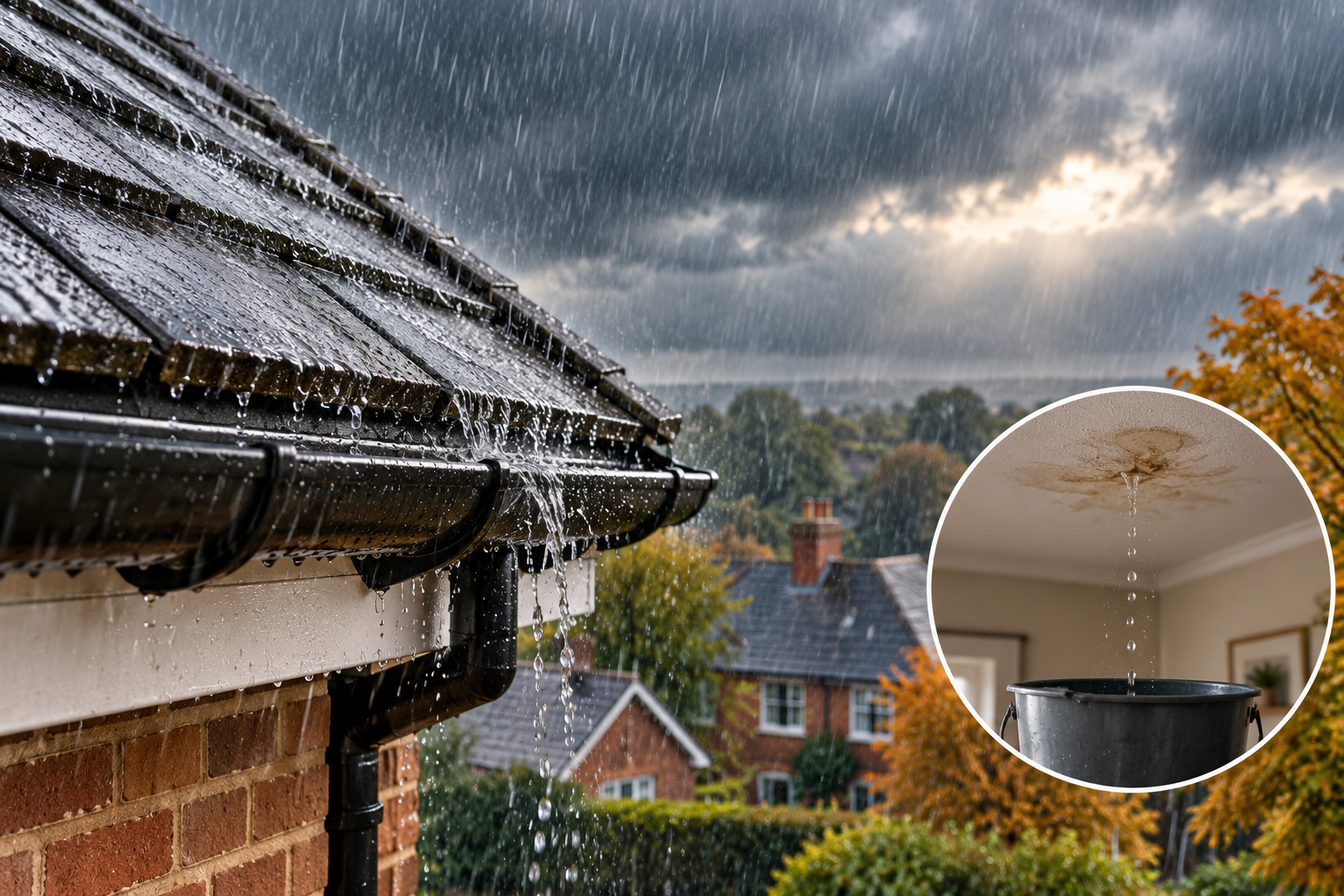
A roof can appear perfectly fine for weeks or even months, only for a leak to suddenly appear during a period of heavy autumn rain.
For many homeowners, this can be confusing. If the roof has a problem, why doesn’t it leak every time it rains?
The answer is that some roofing defects only become noticeable when the roof is exposed to prolonged or wind-driven rain. A small weakness around a tile, flashing or roof junction may cope with light showers but allow water to enter when conditions become more severe.
As we move into autumn, September is a particularly good time to pay attention to these warning signs.
At D&W Roofing Services, we provide professional roof inspections and roof repairs across Suffolk, Norfolk and Essex. Here are some of the most common reasons a roof may only leak during heavy rain.
1. Cracked, Slipped or Missing Roof Tiles
Roof tiles form the first line of defence against the weather, but they don’t last forever.
Tiles can crack because of age, temperature changes or previous storm damage. Strong winds can also cause individual tiles to move or slip out of position.
A minor defect may not cause an obvious problem during light rain. However, when rainfall becomes heavier or continues for several hours, more water can reach the roofing layers underneath.
Eventually, moisture may find its way into the roof structure.
Signs to look for include:
- Missing or visibly damaged tiles
- Pieces of tile on the ground
- Uneven sections of roofing
- Damp patches appearing after prolonged rain
- Water marks inside the loft
Fortunately, isolated tile damage can often be dealt with through a relatively straightforward roof repair if identified early.
2. Damaged Lead Flashing
Lead flashing is used around vulnerable areas of a roof, including chimneys, roof junctions and other points where roofing materials meet.
Its job is simple but extremely important: directing rainwater away from areas where it could otherwise enter the property.
Over time, leadwork can deteriorate, lift, crack or become separated from surrounding materials.
During normal rainfall, the defect may cause no noticeable problem.
But heavy rain — particularly when combined with strong winds — can force water into small gaps around the flashing.
If damp appears close to a chimney breast or roof junction, damaged leadwork is one of the areas that should be checked.
3. Wind-Driven Rain
Not all rain falls vertically.
During windy autumn weather, rain can be driven sideways and underneath roofing components that would normally remain protected.
This can expose weaknesses around:
- Roof tiles
- Flashing
- Chimneys
- Skylights
- Roof valleys
- Ridge tiles
- Roof junctions
This is why some homeowners notice leaks only when rain and strong winds occur at the same time.
A roof may cope perfectly well with an ordinary shower but begin leaking when rain approaches the property from a particular direction.
This type of problem can sometimes be difficult to diagnose without a proper roof inspection.
4. Problems Around Skylights
Skylights are designed to remain watertight, but the area where the window meets the roof requires careful installation and effective flashing.
If seals or flashing around a skylight become damaged, water may begin entering during prolonged rainfall.
You might notice:
- Damp around the window frame
- Water marks on surrounding plaster
- Dripping during particularly heavy rain
- Staining below the skylight
Importantly, the skylight itself isn’t always the cause.
Water can sometimes enter higher up the roof and travel along roofing materials before appearing around the window.
That’s another reason why identifying the actual source of a leak is important before carrying out repairs.
5. Roof Valleys
A roof valley is the internal angle where two sections of roof meet.
Because valleys naturally collect and channel significant amounts of rainwater, they are particularly important during periods of heavy rainfall.
Leaves, moss and debris can restrict the flow of water through the valley.
The valley lining itself may also deteriorate over time.
During a light shower, everything may appear normal. During prolonged rain, however, the volume of water can overwhelm a damaged or obstructed valley and result in water entering beneath the roof covering.
Autumn makes this particularly relevant because falling leaves and debris can accumulate quickly.
6. An Ageing Flat Roof
Flat roofs behave differently from pitched roofs because water does not drain away as quickly.
A properly installed flat roofing system should manage rainfall effectively, but ageing materials, damaged seams or poor drainage can cause problems.
Warning signs include:
- Persistent standing water
- Cracks or splits
- Blistering
- Lifting edges
- Damaged joints
- Damp appearing underneath the roof
Heavy autumn rain can expose defects that weren’t noticeable during the drier summer months.
If a flat roof repeatedly leaks after prolonged rainfall, it is worth having the system professionally assessed rather than repeatedly treating the visible damp inside.
7. The Leak May Not Be Directly Above the Damp Patch
This is one of the most important things homeowners should understand about roof leaks.
Water doesn’t necessarily travel straight down.
After entering the roof, it can run along:
- Rafters
- Battens
- Roofing membranes
- Pipes
- Other structural components
before finally dripping onto insulation or a ceiling.
As a result, the damp patch you can see inside the house may be several feet away from the actual roofing defect.
This is why finding the source of a roof leak can sometimes require more investigation than simply looking directly above the stain.
Why Autumn Rain Exposes Roofing Problems
Summer can hide a surprising number of roofing defects.
During extended periods of relatively dry weather, small cracks, displaced tiles or deteriorating flashing may cause few obvious symptoms.
Then autumn arrives.
Longer periods of rain, stronger winds and falling leaves put additional pressure on the roofing system.
A weakness that went unnoticed during summer can suddenly become obvious.
That’s why September and early autumn are an excellent time to arrange a roof inspection, particularly if you’ve noticed previous leaks, damp or visible roof damage.
What Should You Do If Your Roof Starts Leaking?
The first priority is to protect the interior of the property.
If it is safe to do so, move furniture and valuables away from the affected area and use a suitable container to collect dripping water.
Avoid climbing onto the roof yourself, especially during rain or strong winds.
Working at height in wet conditions can be extremely dangerous.
Instead, arrange for the roof to be professionally inspected.
The objective should be to find the actual source of the water ingress, rather than simply repairing the internal stain it has caused.
Don’t Ignore a Leak Because It Stops
One of the biggest mistakes homeowners make is assuming that a problem has disappeared because the rain has stopped.
If water entered the property once, there was a reason.
The next period of heavy rainfall may cause the same problem again — potentially allowing even more water into the roof structure.
Repeated water ingress can eventually affect insulation, ceilings, plasterwork and roof timbers.
Dealing with the cause early can therefore prevent a relatively small roofing repair from becoming a much more expensive problem.
Roof Leak Repairs Across Suffolk, Norfolk & Essex
At D&W Roofing Services, we provide professional roofing solutions for homeowners and businesses throughout Suffolk, Norfolk and Essex.
Whether you’re dealing with a minor leak, damaged tiles, deteriorated leadwork or unexpected storm damage, our experienced team can inspect your roof, identify the problem and recommend an appropriate solution.
Our services include Roof Repairs, Emergency Roof Repairs, Storm Damage Repairs, Flat Roofing, Leadwork, Skylights, New Roofs and Roof Inspections.
Has Heavy Rain Exposed a Problem With Your Roof?
If you’ve noticed a new damp patch, dripping water or other signs of water ingress following heavy rain, don’t wait for the next spell of bad weather to see whether it happens again.
Contact D&W Roofing Services today for professional advice and a free, no-obligation quotation.
We provide reliable roofing services throughout Suffolk, Norfolk and Essex.